I get asked about my preaching on a regular basis. Most questions stem from my distinct style. My rate of speech is slow and my word count is extremely low. I’m an advocate of deliberate, pregnant pauses. So much so that it has generated a parody or two. This distinct style gets me quizzed by other preachers about my preaching influences and preaching philosophy.
Here’s my most recent sermon. I don’t highlight it as my best sermon, but I offer it as an example of my sermon style:
I also get questions which stem from my church’s “old school” schedule. I preach three unique sermons a week: Sunday morning (twice), Sunday evening, and Wednesday night. This schedule gets me quizzed on my sermon preparation and process.
Here is a bit of solicited, but unsolicited, advice for sermons. If your preaching is in need of improvement or due for a tuneup, here are three recommendations to consider.
Plan Your Sermons
I recommend creating a preaching calendar in order to cultivate long-range sermon preparation. I personally aim to have six months of sermons set in stone with the next six months written in pencil. I’m constantly working to convert pencil marks into stone etchings. The preaching calendar allows me to spend time reading passages, understanding context, connecting dots, forming sermon points, and gathering resources. I don’t have these sermons written months in advance, but I’m working through the passages.
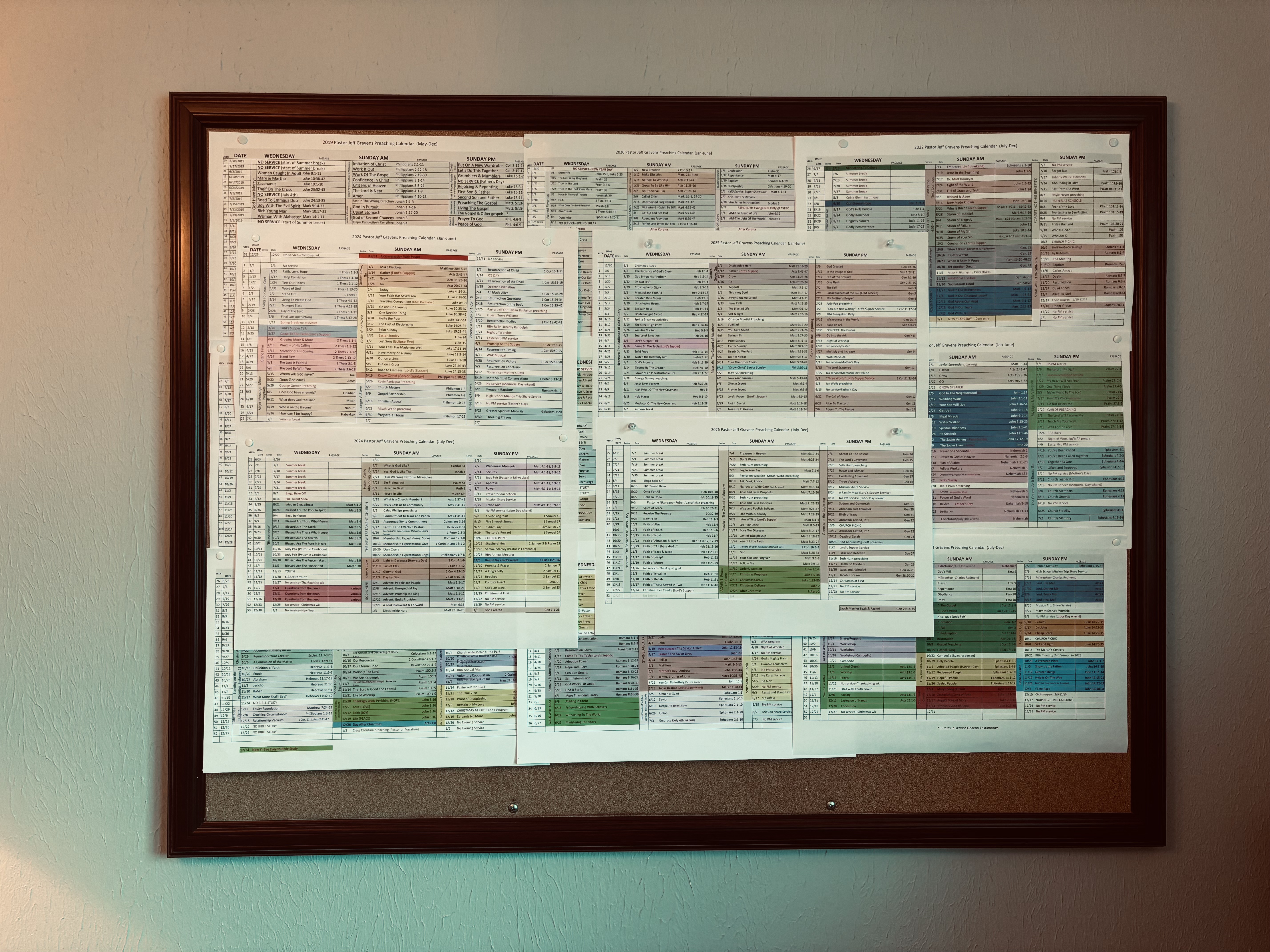
The pastoral life is filled with unexpected and blessed interruptions. Yet, Sundays show up fast. We must be prepared to preach and being prepared to preach requires a plan.
I recommend preaching through books of the Bible and preaching sermon series. Know where you are going and encourage your people to follow along.
Paul encouraged young Timothy, “Preach the word; be prepared in season and out of season; correct, rebuke and encourage—with great patience and careful instruction (2 Timothy 4:2).” Notice the emphasis on preparation and careful instruction.
Edit Your Sermons
I recommend editing yourself clear and concise. Most sermons I hear are far too long, use far too many words, and run down far too many rabbit trails. Preachers need to edit. I diligently work to remove unnecessary information, details, and words.
Once the sermon is written, I ask a series of questions as I read through the sermon: Does this need to be said? Does this support the main idea of the passage and main goal of the sermon? Can this be said in a clearer way? Can this be said in fewer words? I even spend a few hours on Sunday morning running through these questions again. I don’t consider a sermon “done” until it has gone through a thorough editing process.
In conversations with preachers, I’ve found that many don’t have time to edit because they have not adequately planned. In these instances, the sermon is not written until the last minute, thus editing is not an option. The word of God demands better study. Our people deserve better sermons.
My Sunday morning sermons are 25-30 minutes long. I edit myself clear and concise until my sermon manuscript is around 1,200 words. There are no wasted words. This extremely low word count, frees me from being chained to the sermon manuscript. I can easily digest 1,200 words to the point that I can deliver them without (much) use of notes.
A 1,200 word count is unfathomable to many preachers. In part, the low count is a product of my distinct style. It is also a product of my emphasis on editing the sermon.
In Acts 20:7-12, the Apostle Paul preached until midnight. In the midst of this long discourse, Eutychus sunk into a deep sleep and fell out of a third story window. He died. Paul brought him back to life and preached until daylight. Preacher, this is not a model to follow. Just edit your sermons.
Review Your Sermons
I recommend developing thick skin and a sermon review process. The great sin of communication is failing to communicate. Here is the honest truth: Your congregation will not give you sermon feedback. If you seek input, you’ll receive unhelpful comments like “It was great,” “I enjoyed it,” “Nice sermon, pastor.” Or you’ll receive unnecessarily harsh comments like, “I wish you preached like this guy I heard on Instagram.”
For 15 years I’ve gathered with a group of preacher friends each week for “Preach Club.” The crew and format has changed over the years. The current version of Preach Club happens via Zoom for an hour and a half on Tuesday afternoons. The first 45 minutes consists of a sermon review of the most recent sermon preached by one of the four club members on a rotating basis. We all join the meeting having watched the sermon and ready to provide honest critique. The second 45 minutes consists of each club member talking through the sermon for the upcoming Sunday.
My Preach Club consists of three other preachers who have vastly different churches, styles, and theological emphasis. These differences break down the echo chamber and make us better. My preaching is sharpened and improved on a regular basis. The Lord knows I need help!
Paul told Timothy, “Until I come, devote yourself to the public reading of Scripture, to preaching and to teaching (1 Timothy 4:13).” An aspect of our devotion should be the desire to become better equipped and more effective communicators of the good news of Jesus which provides abundant and eternal life.
 Jeff Gravens