Here are the 10 books I read in August. This brings my 2023 total to 72 books. Happy reading!
(I must always clarify that I read many books with which I disagree. I learn the most by reading things that do not represent my position.)
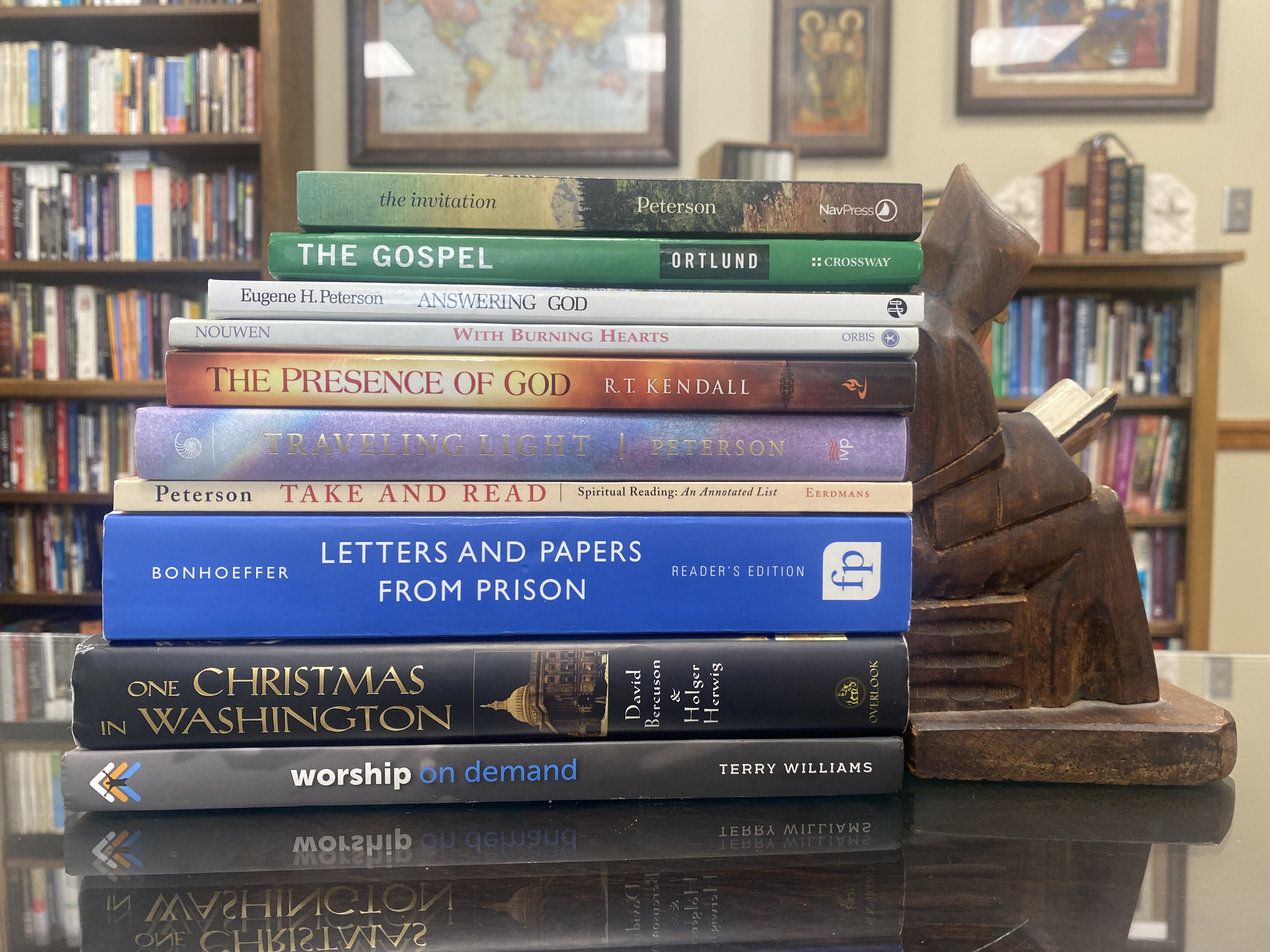
One Christmas in Washington: The Secret Meeting Between Roosevelt and Churchill that Changed the World by David Bercuson and Holger Herwig
This book allows you to sit as a fly on the wall in the meetings that took place between December 1941 and January 4, 1942, when Churchill and Roosevelt forged the Grand Alliance. While war loomed, Americans celebrated Christmas.
Bercuson and Herwig use diaries, meeting notes, personal letters, and detailed minutes to paint a picture of the meetings code named ARCADIA. The book is slow plod but worth the effort. Those interested in the buzz around Oppenheimer, might enjoy reading about the events that led USA into WWII.
The Presence of God: Discovering God’s Ways Through Intimacy With Him by RT Kendall
This book was a gift from Dr. Charles Redmond, who preached for me while I was on a mission trip to Milwaukee. When I returned to my office, I found this book placed on my desk. On the inside page Dr. Redmond wrote, “Jeff, I thought you would enjoy this book.“ It is dated 7/16/23. Prior to the gift, on a phone conversation, I discussed my love for Kendall while Redmond was at a conference in which Kendall was a guest speaker. It was a thoughtful and meaningful gift.
The book is classic Kendall, filled with keen insights into scriptures and insightful anecdotes from his ministry. I appreciated his discussion on the moments in life when God hides his face and what Kendall coined as “the holy nudge.“
Traveling Light: Galatians and The Free Life in Christ by Eugene Peterson
This is a recently re-released and expanded edition of a classic Peterson work. It is not a commentary but rather a collection of deep reflections on the text of Galatians. Each chapter begins with a portion of Paul’s letter, of course from Peterson‘s paraphrase of the Bible, followed by pure gold.
My favorite quote from the work:
“But this gospel is not just any good news – not the good news of a pay raise, or of a good grade in school, or of the victory of our favorite athletic team or of the happy solution of some international problem. It is the unexpected, fresh, surprising good news that God is not angry or indifferent or impersonal, but that God loves us and has provided the means for our salvation. That love and that salvation is the center of absolutely everything, from that center all of life is lived.”
The rerelease of this book was an excuse to read a few other Peterson works.
The Invitation: A Simple Guide to the Bible by Eugene Peterson
This book is brilliance and poetry. Each chapter summarizes a book of the Bible in powerful prose. Peterson is able to capture the author’s intended message in each book, while maintaining the ability to turn a phrase. This is a great example of the reason I love Peterson. He provides both substance and style. His love for scripture and the craft of writing is evident. Pick this one up! It is an under-read Peterson volume.
Answering God: The Pslams As Tools for Prayer by Eugene Peterson
Peterson does some of his best work in the Psalms. His love for poetry and powerful prose lends itself to capturing insights on the dramatic speech. Anyone studying the Psalms or preaching through the Psalms should consult this work first. Pick it up and digest it before reading any commentary.
Take and Read: Spiritual Reading, An Annotated List by Eugene Peterson
This book is quite simple. It is merely Peterson providing his favorite books along with brief annotations. He covers a wide range of topics from classics, to prayer, to spiritual formation, to novels, to poets, to commentaries, to history. This is a narrated tour through Peterson’s bookshelf and favorite books. It is not for everybody. But it sure is for me. It is a joy to sit down for an hour with this gem.
Letters and Papers from Prison by Dietrich Bonhoeffer
Discipleship, Life Together and Letters and Papers from Prison are Bonhoeffer volumes that I have read over and over again. I don’t know if I’ll ever stop.
Bonhoeffer was a German pastor who played a central role in the Confessing Church during the Nazi regime and became one of the most influential theologians of the twentieth century. His public repudiation of Hitler led to his arrest in 1943. Linked to a group of conspirators who attempted assassination of Hitler failed, Bonhoeffer was hanged in April 1945.
This volume provides his concentration camp correspondence. It’s full of personal letters, journal entries, wedding and baptism sermons, and theological reflections. The largest components are letters to and from his family which portray the incredible resilience of the theologian.
With Burning Hearts: A Meditation on the Eucharistic Life by Henri Nouwen
This is Nouwen’s brief reflection on the road to Emmaus passage in Luke 24. His meditation is simple but profound. My copy is torn and tattered, underlined in highlighted, and filled with marginal notes. It will not stand many more readings.
It is not a commentary. Those looking exegesis and exposition will be disappointed. In Nouwen’s characteristic style, he walks through the passage, turning every corner, offering observations.
The Gospel: How the Church Portrays the Beauty of Christ by Ray Ortlund
This is a small book in the Nine Marks: Building Healthy Churches series. It has portions that soar and other portions that sputter. All of it is good but some parts don’t seem good together. The slim nature of the book drives it to be choppy. I enjoyed reading it at the onset of preaching a sermon series on the Good News.
Worship on Demand: God’s Greatest Command by Terry Williams
This book makes a bold claim. William argues that the church has operated by the two “greats”: the great commission and the great commandment. However, God only calls one of these “great.” Williams makes the pitch to place the highest priority on worship. He argues “until we become fully obedient in theology and practice to the first and greatest of all commandments, then the gospel we are preaching is incomplete.”
 Jeff Gravens